Habibi Meaning: What the Word Everyone's Googling Really Means
The Arabic word habibi just became one of the most-searched terms in America. Here's what it actually means, when to use it, and the one American city where it is not a trend at all.
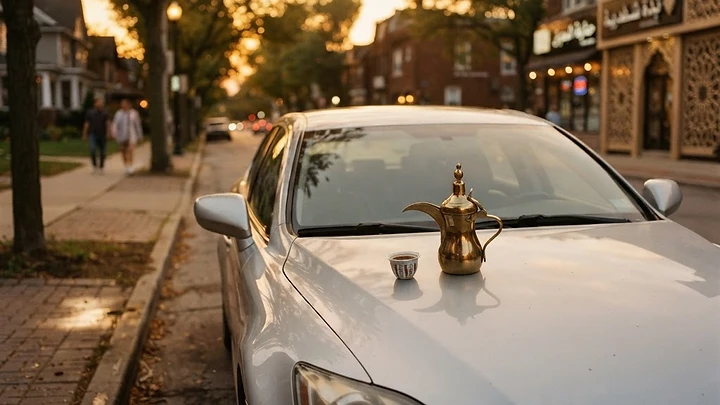
The word went viral this week. "Habibi meaning" is now one of the most-searched terms in America, and like every viral word, most of the people searching it are not asking about language — they are asking whether they just got called something they do not understand.
Here is the short answer, then the part most explainers skip: what the word actually means, when it is used, and the one American city where it is not a trend at all.
What does habibi mean?
Habibi (حبيبي) means "my love" or "my dear." It comes from the Arabic root ḥ-b-b, the same root as hubb (love). It is a term of affection, but it is not, as most English speakers assume, romantic.
You say it to your brother. You say it to a stranger who holds a door. You say it to a friend who just told you bad news, and to a mechanic who tells you the repair is cheap. A father says it to his son, a customer says it to the cashier, and a salesperson says it to the person who just bought the car. In Arabic, warmth is not saved for romance — it is the default register for almost any friendly exchange.
Habibi vs. habibti: the gender rule
Arabic marks gender, and the word follows the person you are addressing:
- •Habibi (حبيبي) — said to a man.
- •Habibti (حبيبتي) — said to a woman.
- •Habib (حبيب) — "beloved," used more between men or as a noun.
If you are a man and someone calls you habibi, they are not flirting. They are being polite, and possibly warm. Context does the work that English speakers expect the word alone to do.
How it is actually used
Three examples, transliterated exactly as they come out of people's mouths:
- •"Yalla, habibi, let's go." — said to a friend who is taking too long.
- •"Shukran, habibi." — thank you, my friend. Said to a barista.
- •"Habibti, don't worry about it." — said by a mechanic, before he knocks $40 off the quote.
Notice that in every case the English sentence carries the meaning, and habibi carries the temperature. That is the whole trick: it is a warm word, not a dramatic one.
The one place in America this is not new
If you are in metro Detroit, habibi needs no explainer. Dearborn, Michigan holds one of the largest Arab American communities in the United States, and the word rides along on the everyday business of the region — at bakeries, at parts counters, and yes, at dealerships.
That matters if you are shopping for a car, because the language of a Michigan deal is a little more relaxed than the language of a Michigan contract. Someone calling you habibi across the desk has not given you a discount. It just means the conversation is friendly. The number is still the number. Warmth is not a line item, and the out-the-door figure is the only one that counts.
Two more words worth knowing before you go car shopping
- •Yalla — "let's go" or "come on." Usually heard right before someone tries to move you to the next step faster than you are ready for.
- •Khallas — "done," "finished." The word that should end the negotiation when you are happy with the number, and the moment to stop talking.
Frequently asked questions
Is habibi romantic? Usually not. In everyday Arabic it works roughly like "my friend," with more affection in it. Romance is possible, but it is carried by tone and context, not by the word.
Can I say habibi to a woman? Use habibti if you are speaking to a woman. Habibi is for men, unless you are addressing a group.
Where does the word come from? Arabic. It is used across the Arab world, from Levantine cities to North Africa, with the same core meaning.
Why is everyone searching it this week? The word was used in a televised victory speech in Michigan and went viral within hours. Google searches for "habibi meaning" spiked, which is how you probably got here.
While you're here
Carummah is an independent car research site, built in Michigan by a former sales specialist. If you came for the word, stay for the part that saves actual money:
More car news

The Average New Car Now Costs $45,915, and the Average Payment Hit a Record $821
J.D. Power's September forecast puts the average transaction price at $45,915 and the average monthly payment at $821, the highest ever recorded for the month. Longer loans and rising negative equity are covering the gap.

Rivian Can Now Sell You a Truck Directly in Washington State
After bills failed three times and a $4.8 million ballot threat, Rivian has a dealer license in Washington. It is the first crack in franchise laws that Tesla has held alone since 2014.

Honda Is Preparing a $2.5 Billion Hybrid Plant in Ohio, Its First New US Factory Since 2008
Honda is in final talks to build a hybrid assembly plant in Ohio worth up to $2.5 billion, with production targeted for 2030. It is a striking reversal from the EV hub the same state was meant to become.